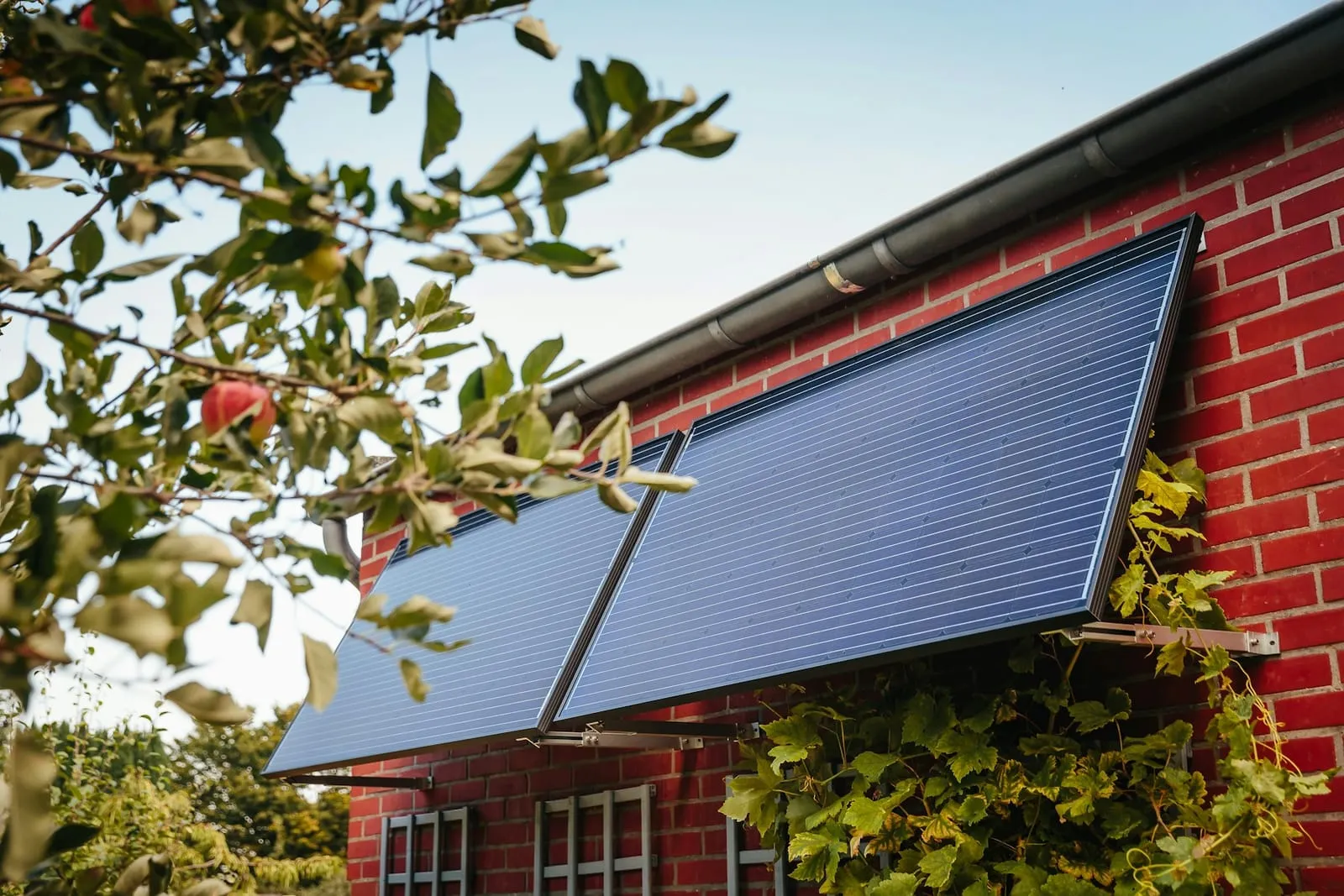
Use the mounting that comes with your kit, or one the manufacturer approves. The rules apply to kits “installed in accordance with the manufacturer’s instructions” (Explanatory Memorandum to SI 2026/848, para 5.1).
What do the product rules say about mounting?
The government’s Interim Product Specification (IPS) is the standard every plug-in kit must meet. On mounting:
- Reversible and non-permanent. Cable ties, rope, tape, bungees and straps alone are not an acceptable fixing (IPS §5.5.1, §8.3.2).
- Outdoor parts must be rated at least IP55, including an outdoor socket if you use one (IPS §4.2.3, §5.4).
Where you can't mount a kit
- “ACM or MCM cladding systems; HPL cladding systems; timber cladding systems; timber balconies; buildings that are subject to external wall remediation works” (IPS §5.8).
- Walls “that form a property boundary between dwellings” (IPS §8.3.2).
Do you need planning permission in England?
Not if your setup fits the permitted development limits. Since 27 August 2026, England’s permitted development rules name plug-in solar explicitly (SI 2026/896).
- max protrusion, wall facing a highway
- 0.2 m
- max protrusion, other walls
- 0.4 m
- max free-standing panel area
- 9 m²
For a house:
| Where | Main limits |
|---|---|
| On a wall, balcony or roof enclosure | May not stick out more than 0.2 m if the wall faces a highway, 0.4 m otherwise |
| Free-standing (garden, ground frame) | Up to 1 m high within 5 m of a boundary and in front of the house; up to 2 m within 5 m of a boundary; up to 4 m elsewhere. Panel area no more than 9 m² |
| Wooden walls, balconies, fences, gates, or timber-clad parts | Not permitted development for plug-in solar |
| Listed buildings | Not permitted development, on the building or (for free-standing panels) within its grounds |
| Conservation areas | Not on a wall, balcony or roof enclosure that faces a highway |
Blocks of flats have their own rules in the same order: no listed blocks, and no wooden walls, balconies or timber-clad parts. Full detail in planning permission.
Renters and leaseholders also need permission from the landlord, freeholder or managing agent (IPS §8.3.1). See landlord permission.
What we couldn't confirm
Scotland and Wales have their own planning rules, and we haven’t found any plug-in-specific changes there yet. See Scotland and Wales.
How does position affect output?
Tilt makes a big difference. From PVGIS (2005–2023 averages) for our 0.88 kWp reference kit facing south:
| City | Tilted at 35° (garden frame, flat roof) | Vertical (railing, wall) |
|---|---|---|
| London | 897 kWh/yr | 654 kWh/yr |
| Bristol | 900 kWh/yr | 650 kWh/yr |
| Edinburgh | 794 kWh/yr | 601 kWh/yr |
| Manchester | 780 kWh/yr | 569 kWh/yr |
Vertical panels make 72–76% of the tilted figure over a year, but more in midwinter, when the sun is low. In Bristol, per kWp, December gives 39.9 kWh vertical against 33.8 kWh at 35°. Flatter output across the year also means more of it gets used at home.
Direction matters too. Try yours in the calculator, which covers eight directions and six tilts.

Brackets holding a panel to a balcony railing.
Which mounting suits your home?
- Balcony railing. Usually vertical or slightly tilted. Check the balcony isn’t timber and the railing can take the load. Balcony · flats
- Outside wall. Within the 0.2 m / 0.4 m protrusion limits in England. Not a party wall, not timber-clad. Wall
- Garden frame. The best angle for yearly output, and the easiest to adjust. Height limits apply near boundaries. Garden
- Fence. Not on a wooden fence under England’s permitted development rules. Fence
- Flat roof or shed. Can be tilted for good output; check access and the roof’s condition. Flat roof · Shed
- Difficult directions. North-facing · East-west
Can you mount it without drilling?
Yes. A mount that clamps, hooks on or is held down by weight suits renters and makes the “reversible and non-permanent” rule easier to meet. The kit still has to be held securely: straps or ties on their own don’t count (IPS §8.3.2). Follow the manufacturer’s instructions for the specific mount.
What to do next
- Check your spot’s output in the calculator, or plan around shade with the shade planner.
- Filter kits by mounting type on in stock.
- Read install for the rest of the setup.
Sources
- DESNZ Plug-in Solar Device Interim Product Specification v2.0 (July 2026), §5.5, §5.8, §8.3.2
- SI 2026/896: Town and Country Planning (General Permitted Development) (England) (Amendment) Order 2026
- Explanatory Memorandum to SI 2026/848 (para 5.1)
- DESNZ plug-in solar final-stage impact assessment (paras 13–14)
- EU JRC PVGIS 5.3 (non-interactive service)


