Explained
What is a kWh, and how much does 1 kWh cost?
A kilowatt-hour (kWh) is a unit of energy: 1,000 watts used for one hour. It's the 'unit' your electricity bill charges for, and what a solar panel's output is measured in.
1 kWh is roughly
- boiling a 3 kW kettle
- 20 min
- watching a 100 W TV
- 10 hours
- an 8 W LED bulb left on
- 5 days
- what it costs (GB average, price cap)
- 26.32p

What is a kWh?
A kilowatt-hour (kWh) measures energy: how much electricity is used or produced over time. “Kilo” means 1,000, so a kilowatt is 1,000 watts. Use 1 kW for one hour and you’ve used 1 kWh. Your supplier calls each one a “unit”.
The same kWh can be used quickly or slowly. A 3 kW kettle gets through 1 kWh in 20 minutes; a 100 W TV takes 10 hours. To work out kWh yourself, multiply the watts by the hours and divide by 1,000:
kW vs kWh: what’s the difference?
kW (and W) measure power: how fast energy flows at a single moment. kWh measures energy: the total that has flowed. It’s the difference between your speed and the distance you’ve driven.
kWPower
How fast energy is used, right now
- Like
- your speed in mph
- On
- appliance labels, a kit’s “800 W”
- You pay
- nothing for it directly
kWhEnergy
How much is used over time
- Like
- the miles you’ve driven
- On
- your bill, your meter, a kit’s yearly output
- You pay
- for every one you import
A plug-in solar kit’s “800 W” is its maximum output rate. What matters for your bill is how many kWh it makes over a year, and how many of those you use yourself.
How much does 1 kWh of electricity cost?
Most households in Great Britain pay a unit rate set or capped by the Ofgem price cap, which changes every three months. From 1 October 2026 electricity has 0% VAT until 31 March 2027, and the rates below already include that (Ofgem). The cap is set for each of the 14 regions, so the price of a kWh depends on where you live:
Price of 1 kWh by region
October to December 2026
| Region | Unit rate | Change on last period |
|---|---|---|
| East Midlands | 25.36p | +0.26 |
| North East England | 25.46p | +0.24 |
| Yorkshire | 25.60p | +0.29 |
| West Midlands | 25.60p | +0.27 |
| South Scotland | 26.11p | +0.26 |
| North Scotland | 26.35p | −0.07 |
| Southern England | 26.47p | +0.05 |
| North West England | 26.49p | +0.36 |
| South Wales | 26.55p | +0.22 |
| South West England | 26.58p | +0.19 |
| London | 26.60p | +0.25 |
| East of England | 26.61p | +0.23 |
| South East England | 26.88p | +0.21 |
| Merseyside and North Wales | 27.86p | +0.20 |
Fixed tariffs, Economy 7 and other time-of-use tariffs charge different rates; your bill or app shows yours in pence per kWh. Put any number of kWh, or an appliance’s watts and hours, into the converter:
kWh to £ converter
1 kWh
26.32p
at 26.32p per kWh, October to December 2026 price cap
Unit rate only. The daily standing charge is extra.
How much is 1 kWh of gas?
Gas is also sold by the kWh, at a much lower price than electricity. Your gas meter measures cubic metres; your supplier converts that to kWh for your bill.
Electricity
26.32p per kWh
+ 54.83p a day standing charge
Gas
7.97p per kWh
+ 29.68p a day standing charge
How has the price of a kWh changed?
The price cap moves every quarter with wholesale energy costs. Here’s the GB average for electricity and gas since late 2024:
Price of 1 kWh since Oct 2024
ElectricityGas
GB average Ofgem price cap, pence per kWh, Direct Debit. Electricity ranged from 24.50p (Oct–Dec 2024) to 27.69p (Jan–Mar 2026).
Show as a table
| Quarter | Electricity | Standing | Gas | Standing |
|---|---|---|---|---|
| Oct–Dec 2026 | 26.32p | 54.83p/day | 7.97p | 29.68p/day |
| Jul–Sept 2026 | 26.11p | 57.19p/day | 7.33p | 29.04p/day |
| Apr–Jun 2026 | 24.67p | 57.21p/day | 5.74p | 29.09p/day |
| Jan–Mar 2026 | 27.69p | 54.75p/day | 5.93p | 35.09p/day |
| Oct–Dec 2025 | 26.35p | 53.68p/day | 6.29p | 34.03p/day |
| Jul–Sept 2025 | 25.73p | 51.37p/day | 6.33p | 29.82p/day |
| Apr–Jun 2025 | 27.03p | 53.80p/day | 6.99p | 32.67p/day |
| Jan–Mar 2025 | 24.86p | 60.97p/day | 6.34p | 31.65p/day |
| Oct–Dec 2024 | 24.50p | 60.99p/day | 6.24p | 31.66p/day |
What does 1 kWh run, and what does it cost?
Divide 1,000 by an appliance’s wattage to get the hours that 1 kWh runs it. Anything that heats (showers, kettles, ovens) gets through a kWh in minutes; electronics and lighting take hours or days.
- 7minElectric shower9,000 W39.5pfor 10-minute shower
- 20minKettle3,000 W3.95pfor 3-minute boil
- 30minElectric oven2,000 W52.6pfor an hour, flat out
- 50minMicrowave1,200 W2.63pfor 5 minutes
- 10hoursTV100 W10.5pfor an evening (4 h)
- 20hoursLaptop50 W10.5pfor a working day (8 h)
- 4daysWi-Fi router10 W6.32pfor a whole day
- 5daysLED bulb8 W1.05pfor an evening (5 h)
How many kWh does a home use?
Ofgem sets “typical domestic consumption values” from real meter readings. For 2026 they are 1,600 kWh a year for a low user, 2,500 kWh for a medium user and 3,800 kWh for a high user, on a single-rate meter (Ofgem). Homes with electric heating, a heat pump or an electric car can use several times that.
- Low user1,600kWh a yearAbout 4.4 kWh a day£621a yearA quarter of homes use less
- Medium user2,500kWh a yearAbout 6.8 kWh a day£858a yearThe typical (median) home
- High user3,800kWh a yearAbout 10.4 kWh a day£1,200a yearA quarter of homes use more
How much of a typical home's 2,500 kWh could an 800 W plug-in kit supply?
About 467 kWh a year: the part of its output you'd use as it's made, for a kit facing south in Birmingham. Work out yours →
Your own figure is on your bill or in your supplier’s app, usually as kWh a month or a year. A smart meter’s in-home display shows it live.
How to compare tariffs using kWh
Every electricity bill has two parts: the kWh you use multiplied by the unit rate, and a daily standing charge you pay regardless. To compare two tariffs, multiply your yearly kWh by each unit rate and add 365 days of each standing charge. The higher your use, the more the unit rate matters.
A typical year's electricity bill
2,500 kWh at the GB average price cap
£858a year
- kWh × unit rate
- 2,500 × 26.32p. Goes down with every kWh you don't buy, including ones your panels make.
- Days × standing charge
- 365 × 54.83p. Fixed: you pay it however little you use.
Our tariff matcher does this for you, including time-of-use tariffs, and adds what a plug-in kit would save on each.
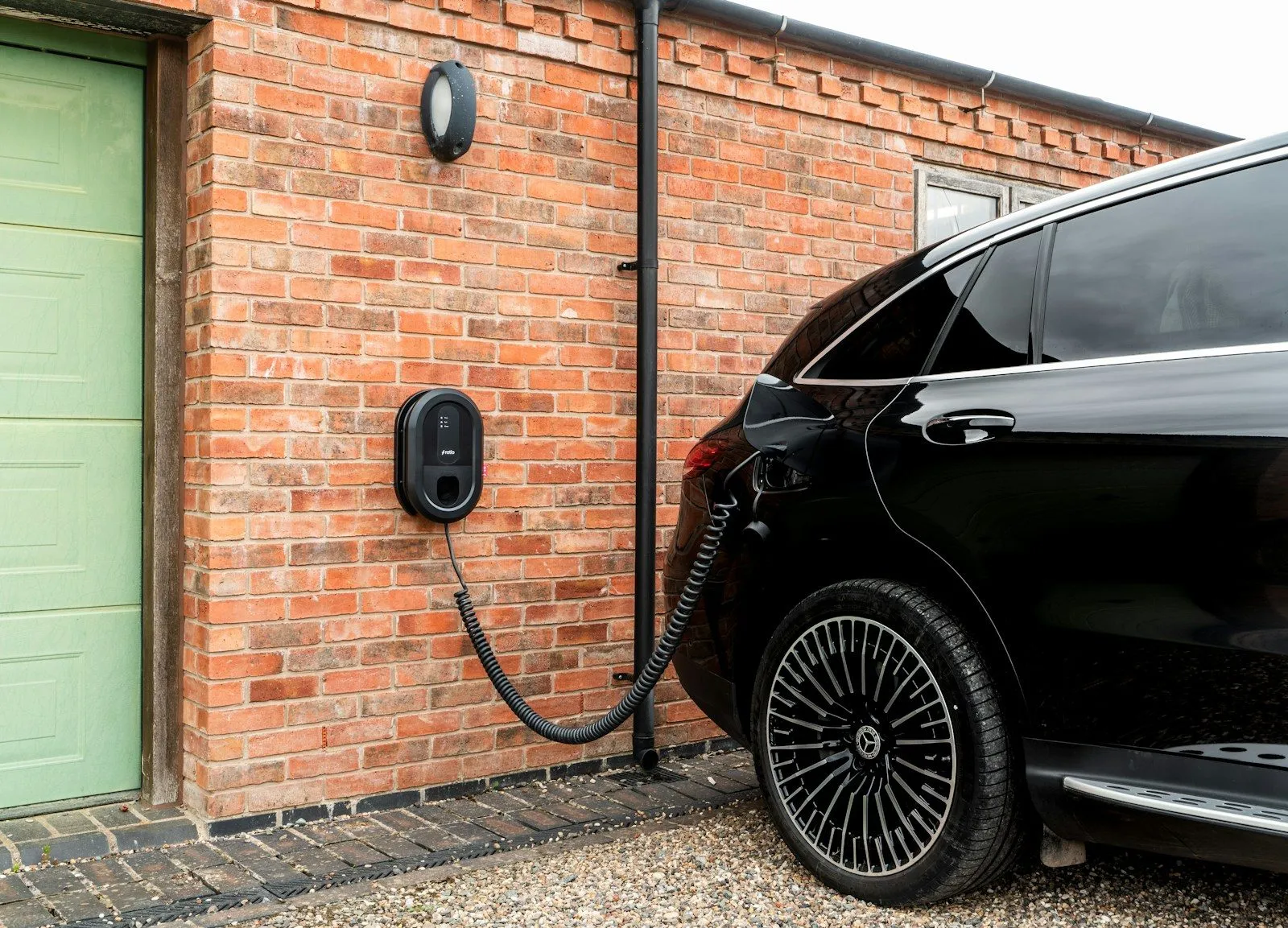
kWh in batteries and electric cars
kWh also measures how much energy something can store. A battery’s capacity in kWh tells you how much it holds; a charger’s kW tells you how fast it fills.
- 15 WhA phone battery · 0.4p to fillAbout 65 full charges in 1 kWh, before charger losses.
- 2 kWhA home battery · 52.6p to fillAbout 56% of what an 800 W kit makes on an average June day (3.5 kWh).
- 60 kWhAn electric car · £15.79 to fillA 7 kW home charger adds 7 kWh an hour, so about 8½ hours from empty to full.
How to use fewer kWh
The quickest wins are the things that draw the most power or run all the time:
- Shorter electric showersAt around 9 kW, an electric shower is often the most powerful thing in the house. Every minute counts.
- Boil only what you needA kettle draws about 3 kW the whole time it’s on, so the less water, the fewer kWh.
- Switch off standbyThings left on all the time add up: 10 W running all year is about 88 kWh.
- LED bulbs everywhereAn LED uses a fraction of the power of an old filament or halogen bulb for the same light.
- Watch your meterA smart meter display shows kWh live. Switch things on and off to see what each one draws.
- Make some of your ownA plug-in solar kit covers part of your daytime use. See what yours would save →
Watts, kWh and bigger units
Each unit is 1,000 times the one before. A TWh (terawatt-hour) is a billion kWh. Scientists measure energy in joules: 1 kWh is 3.6 million joules (3.6 MJ).
- Whwatt-hourPhone and power-bank batteries
- kWhkilowatt-hourBills, meters, home batteries, solar output
- MWhmegawatt-hourSolar farms, business energy
- GWhgigawatt-hourPower stations, national statistics (and TWh)
kWh and plug-in solar
Every kWh your kit makes that you use in your home is a kWh you don’t buy, so it’s worth your unit rate. Here’s what a typical 800 W kit makes in kWh through the year, using our live model:
kWh from an 800 W plug-in kit
890 Wp of panels, 800 W inverter, south-facing at 30°, Birmingham
- kWh a year
- 853
- kWh used at home (55%)
- 467
- saved a year at 25.60p
- £119
Most plug-in kits can’t be paid for exported electricity, so kWh you don’t use while the sun is out are worth nothing to you unless you have a battery. That’s why our calculator values only the kWh you use, at your region’s unit rate, and why the kWh a kit makes in summer matter more than its peak watts.
Questions
What is a kWh?
A kilowatt-hour (kWh) is a unit of energy. It's the energy used by something drawing 1,000 watts (1 kW) for one hour, or 100 watts for ten hours. Electricity bills call it a 'unit'.
How much is 1 kWh of electricity in the UK?
Under the Ofgem price cap for October to December 2026, 1 kWh of electricity costs 26.32p on average in Great Britain if you pay by Direct Debit on a single-rate meter. The rate varies by region, and fixed or time-of-use tariffs can be higher or lower.
How much is 1 kWh of gas?
Gas is much cheaper per kWh than electricity: 7.97p on average under the Ofgem price cap for October to December 2026, plus a standing charge of 29.68p a day.
What's the difference between kW and kWh?
kW is power: how fast energy is used or made at a moment. kWh is energy: power multiplied by time. A 2 kW heater running for 3 hours uses 6 kWh.
How many kWh does a UK home use?
Ofgem's 2026 figures for a home on a single-rate meter are 1,600 kWh a year for low use, 2,500 kWh for medium (typical) use and 3,800 kWh for high use. Medium is just under 7 kWh a day. Homes with electric heating, a heat pump or an electric car use much more.
How do I work out how many kWh an appliance uses?
Multiply its power in watts by the hours it runs, then divide by 1,000. A 3,000 W kettle running for 3 minutes (0.05 hours) uses 3,000 × 0.05 ÷ 1,000 = 0.15 kWh.
What is the standing charge?
A fixed daily charge on top of the price per kWh. You pay it every day you're connected, however little you use. Under the price cap for October to December 2026 it averages 54.83p a day for electricity.
How many kWh does a battery or electric car hold?
Battery size is given in kWh. Plug-in home batteries are typically a few kWh; electric car batteries are often 40 to 80 kWh or more. A 7 kW home charger adds about 7 kWh an hour.
How many kWh does an 800 W plug-in solar kit make?
It depends on where you live, which way the panels face and shading. A south-facing kit in central England makes several hundred kWh a year, most of it from April to September. Our calculator works it out for your postcode.
Sources
- Ofgem: energy price cap rates by region
- Ofgem: summary of changes to the price cap, 1 Oct to 31 Dec 2026 (typical consumption values, VAT)
- Ofgem: changes to the energy price cap, 1 October to 31 December 2026 (GB average electricity and gas rates)
- Ofgem: review of typical domestic consumption values, decision (2026 low, medium and high use)
- PVGIS non-interactive service (EU JRC)