Your situation
Plug-in solar on fences
Can you put solar panels on a fence? Why wooden fences are excluded from England's permitted development, and output by direction for vertical panels.
PVGIS solar data
The numbers
Estimated yearly output of a typical 890 Wp kit (800W cap), from PVGIS solar data for each place. Get yours.
| Setup | London | Manchester | Edinburgh |
|---|---|---|---|
| South-facing, vertical (fence) | 661 kWh | 575 kWh | 607 kWh |
| East-facing, vertical (fence) | 464 kWh70% of the first row | 408 kWh71% of the first row | 405 kWh67% of the first row |
| West-facing, vertical (fence) | 444 kWh67% of the first row | 395 kWh69% of the first row | 399 kWh66% of the first row |
| South-facing, tilted 30° (garden stand, for comparison) | 899 kWh136% of the first row | 783 kWh136% of the first row | 795 kWh131% of the first row |
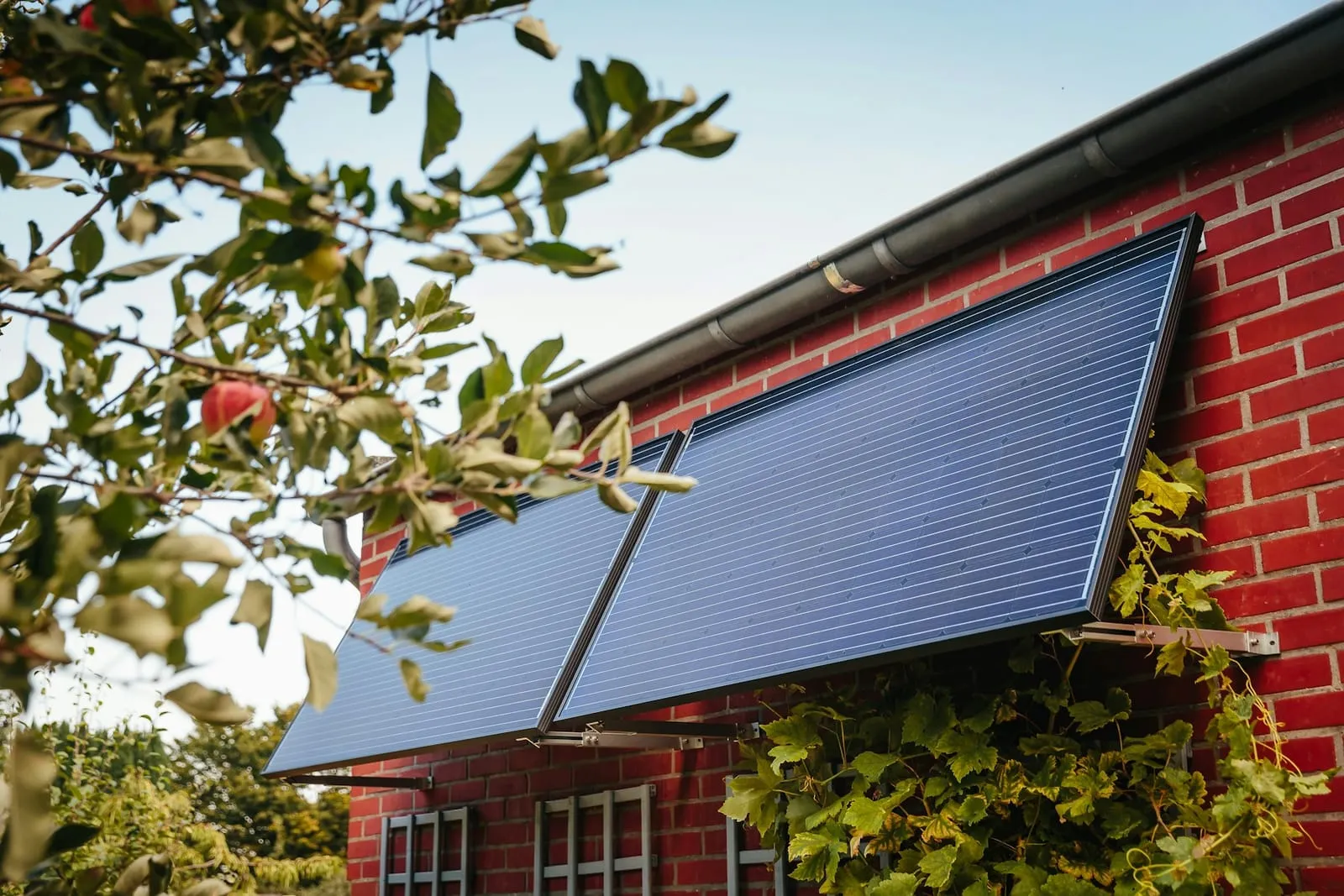
A fence looks like an easy place for panels: it’s already there, it’s often in the sun, and it keeps them out of the way. But many garden fences are wooden, and that is exactly what the new rules in England exclude. The figures above compare vertical panels facing each way with a tilted garden stand.
Rules and permissions
Wooden fences are not permitted development in England. The 2026 planning changes say plug-in solar is not permitted development “on a wooden fence, gate, wall or other means of enclosure” (SI 2026/896). Putting a kit on a timber fence in England would need a planning application. We have not found any guidance on whether councils would grant one. Metal, concrete or masonry fences and walls aren’t covered by that exclusion, but the other stand-alone limits still apply: height (a boundary fence is within 5 m of the boundary, so 2 m, or 1 m in front of the house’s main elevation), a 9 m² panel area, and nothing within the grounds of a listed building.
The product specification. Separately, the DESNZ specification bans installation on timber balconies and timber cladding systems (IPS §5.8). It also says users must not fix panels to walls “that form a property boundary between dwellings” (IPS §8.3.2). How that applies to a garden boundary wall, as opposed to a house wall, isn’t spelled out; ask the manufacturer.
Whose fence is it? Boundary fences are often shared or owned by a neighbour. If it isn’t yours, you need the owner’s permission. If you rent, you need your landlord’s (IPS §8.3.1; DESNZ).
Scotland and Wales. We found no plug-in-specific planning change there, so the wooden-fence exclusion above is England-only. Check with your council; the product specification rules apply across Great Britain.
What to look for
- An alternative to the fence. A free-standing frame in front of a fence, not attached to it, may be simpler under the England rules. See gardens.
- Direction. Fences often run east–west or north–south. Compare the rows above before assuming a fence face is worth it.
- Bifacial panels. These collect some light on the back, which can help on a free-standing vertical frame with open space behind. Our figures don’t include any rear-side gain.
- Mounting. Fixing must be reversible and non-permanent, and not held by cable ties, rope, tape or straps alone (IPS §5.5.1).
- Socket. The plug must reach a fixed socket (IP55 or better outdoors) with no extension lead.