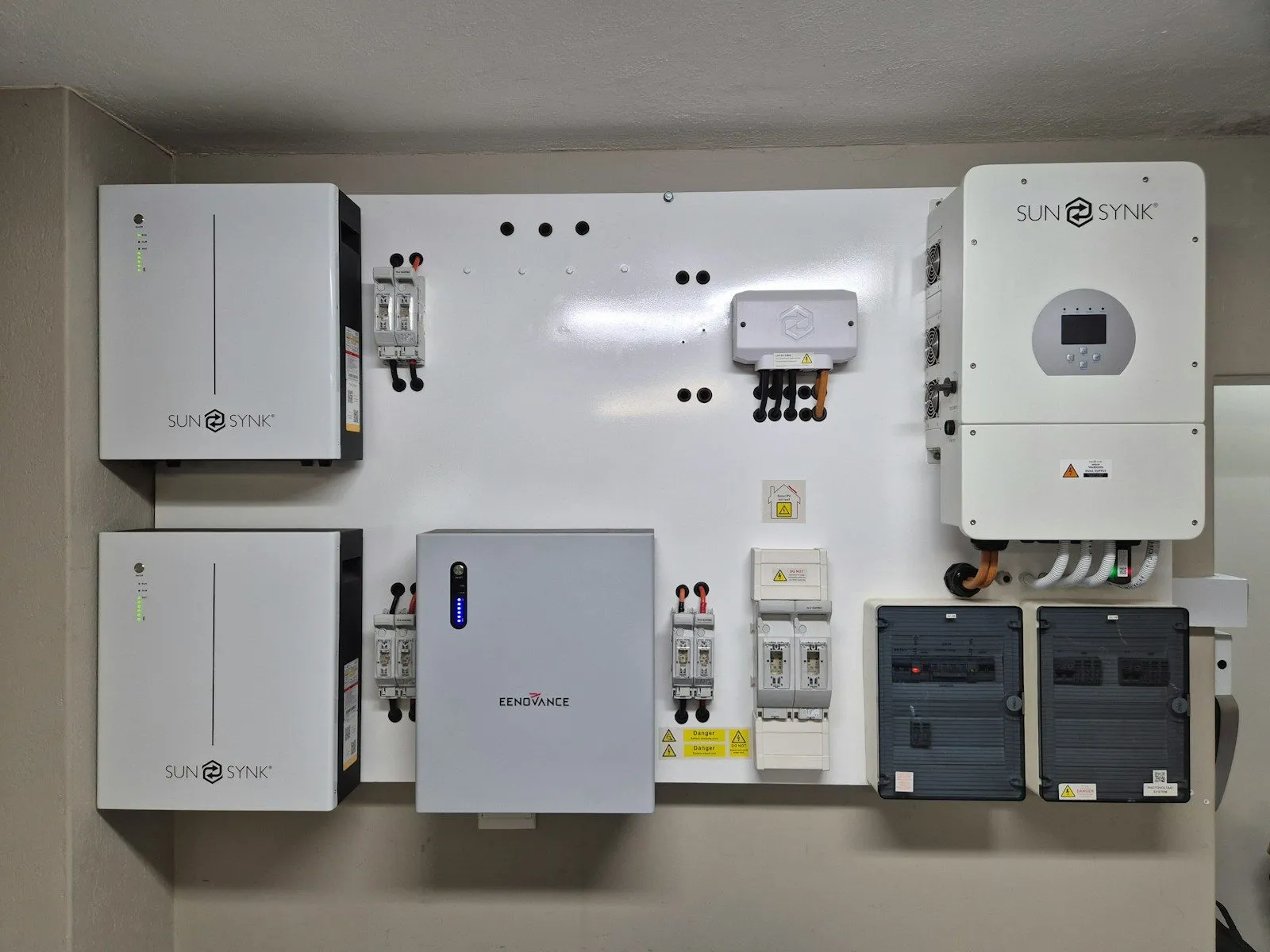
Can you add a battery to plug-in solar?
No, not under the current rules. Three documents say so, and they agree.
The law
SI 2026/848 defines a “plug-in microgenerator” as a source of energy that, among other things:
is not designed to import electrical energy from a low voltage consumer’s installation for the purpose of storing energy for later supply, other than for control or auxiliary functions permitted by the Plug-in Solar Device Interim Product Specification
(SI 2026/848, definition inserted into ESQCR reg 1(5)).
A device that charges its battery from your home’s wiring and gives the energy back later doesn’t meet that definition. So it doesn’t benefit from the change to ESQCR regulation 22 that allows compliant plug-in microgenerators.
The product specification
The DESNZ Interim Product Specification (IPS) is the technical standard a plug-in device must meet. Its scope (IPS §1) excludes:
- “plug-in battery systems”
- “plug-in solar PV devices integrated with battery systems”
The network rules
The amended G98 code names “Plug-in Solar PV and Plug-in Electricity Storage” in anticipation of future rules. But Ofgem is clear that “Plug-in Electricity Storage devices will therefore remain prohibited from being sold, supplied, or used in the UK” (Ofgem, 11 Aug 2026).
How to shop without getting caught out
- Kits with an integrated battery are marked “outside the GB rules” on our kit pages, unless the exact configuration matches a Compliant entry on the ENA Type Test Register. They never appear in our default in stock or best lists.
- Check the whole kit, not just the inverter. Use the compliance checker or the compliance checklist.
On sale here doesn't mean allowed
“Balcony batteries” and solar kits with storage are sold in the UK, but that doesn’t make them compliant for plug-in use. The duty is on manufacturers to register and be assessed as Compliant before selling (IPS §7), and the government says it is “not introducing new enforcement powers or a separate enforcement regime” (DESNZ Government Response). Nobody checks the shop for you.
Is plug-in solar worth it without a battery?
It can be. The government’s own savings figures assume no storage.
DESNZ’s impact assessment (Table 7) models an 800 W kit with no battery, in a home using 3,323 kWh a year with someone in all day:
- kit, no battery
- 800 W
- of output used at home
- 62%
- a year saved (Jul–Sep 2026 cap)
- £110
DESNZ’s headline claim of “up to £110 a year” comes from this case.
Without a battery, what matters is how much you use in daylight. Our worked figures are in is it worth it. Ways to raise daytime use are in best tariffs.
Where do power stations and standalone batteries fit?
A portable power station is a battery with its own sockets. You charge it from a wall socket or its own solar panel, then plug appliances into it. It isn’t connected to feed your home’s wiring, and the SI’s definition only covers devices “designed to operate in parallel with a distributor’s network”. It’s a different product, not a way round the rules.
| Portable power station | |
|---|---|
| Runs appliances in a power cut | Yes, until it runs down. A plug-in kit can’t (see power cuts) |
| Stores your plug-in kit’s surplus for the house | No. It doesn’t feed back into the home’s wiring |
| Cuts your bill if charged from the mains | No. Some energy is lost in each charge and discharge |
The full comparison is in plug-in solar vs power station.
Will the rules change?
Possibly, but not soon. DESNZ describes the IPS as interim, with a “full revision of the underlying British Standards” planned “within around 2-3 years” (Explanatory Memorandum, para 6.5).
What we couldn't confirm
The G98 amendment already names plug-in storage as a category, but we found no date for allowing it. We’ll update this guide and our kit flags if the rules change.
What to do next
- Pick a Compliant kit without a battery from in stock, or narrow it down with the kit finder.
- Check what a kit would save you in the calculator.
- For backup power, browse power stations and batteries. These are listed as standalone products, not plug-in solar.
Sources
- SI 2026/848: definition of plug-in microgenerator
- ESQCR 2002 regulation 22 (as amended)
- DESNZ Plug-in Solar Device Interim Product Specification v2.0 (July 2026), §1 Scope
- DESNZ Government Response on plug-in solar (July 2026)
- Ofgem decision approving DCRP/MP/26/02 (G98 Issue 2 Amendment 1)
- Explanatory Memorandum to SI 2026/848
- DESNZ plug-in solar final-stage impact assessment